
 pin it
I first encountered authentic Greek salad during a trip to Athens, and it completely changed my perspective on what a salad could be. Unlike the lettuce-heavy versions I'd seen back home, this traditional Greek salad was all about the vegetables – chunky, fresh, and full of flavor. The waiter explained that a true Greek salad, or Horiatiki, never contains lettuce. Instead, it celebrates the best of Mediterranean produce: ripe tomatoes, crisp cucumbers, tangy feta, and those incredible Kalamata olives. When I returned home, I was determined to recreate that experience. After several attempts, I realized the secret wasn't in fancy techniques or exotic ingredients – it was about using the freshest vegetables possible and not overdressing them. The olive oil should be high quality, the lemon juice freshly squeezed, and the feta should be creamy and slightly salty. Now, every time I make this salad, I'm transported back to that sunny afternoon in Greece, sitting at a small table overlooking the Acropolis, enjoying simple food done perfectly.
Why I love this recipe
I love this Greek salad recipe because it embodies everything I value in cooking: simplicity, freshness, and bold flavors. There's something deeply satisfying about creating something so delicious with so little effort. It's my answer to busy weeknights when I want something healthy but don't have time to slave over the stove. What really makes this recipe special is how it brings people together. I've served it at countless gatherings, and it always disappears first. The colors are so vibrant that it makes any table look beautiful, and the flavors are universally appealing. I also appreciate how versatile it is – it works as a side dish, a light lunch, or even a topping for grilled bread. From a health perspective, it's packed with nutrients, healthy fats from the olive oil, and protein from the feta. But honestly, I'd make it even if it wasn't healthy, simply because it tastes like sunshine. Every bite is a reminder that the best food doesn't need to be complicated.
What You Need From Your Kitchen
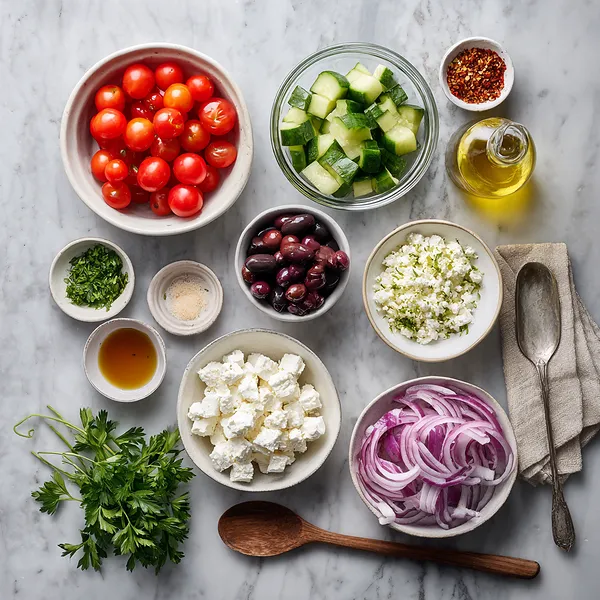
- Cherry Tomatoes: Halve them for the perfect bite-sized pieces that release their sweet juices
- Cucumber: Dice into chunks and remove seeds if they're watery for better texture
- Kalamata Olives: Pit them if necessary and leave whole or halve for easier eating
- Feta Cheese: Crumble into rustic chunks, keeping some pieces larger for texture
- Red Onion: Slice very thinly to add bite without overwhelming the other flavors
- Extra Virgin Olive Oil: Use high-quality oil as it's a key flavor component of the dressing
- Fresh Lemon: Juice it fresh for the brightest, most vibrant citrus flavor
Let's Make These Together
- Prep Your Fresh Vegetables
- Start by washing all your vegetables thoroughly under cold water. Take your cherry tomatoes and slice them in half, allowing their juices to be released when tossed with the dressing. Cut your cucumber into bite-sized chunks – about half-inch pieces work perfectly. If your cucumber has large seeds or seems watery, you can scoop out the center, though it's not necessary for most varieties. Thinly slice your red onion into half-moons; the thinner, the better, as they'll distribute more evenly throughout the salad and be less overpowering.
- Add the Mediterranean Stars
- Now it's time to add those classic Greek ingredients that make this salad special. Toss in your pitted Kalamata olives – their briny, rich flavor is essential to authentic Greek salad. Then comes the feta cheese, which you should crumble by hand into irregular chunks over the vegetables. Don't crumble it too finely; you want substantial pieces that provide creamy bursts of tangy flavor in every bite.
- Create the Tangy Dressing
- In a separate small bowl, combine your extra virgin olive oil with freshly squeezed lemon juice. Add the dried oregano, which is the signature herb of Greek cuisine. Whisk everything together until it's well combined. Taste your dressing and adjust as needed – if you like it more tangy, add a bit more lemon; if you prefer it smoother, add a touch more olive oil. Remember, the feta and olives are already salty, so you likely won't need additional salt.
- Toss and Combine Everything
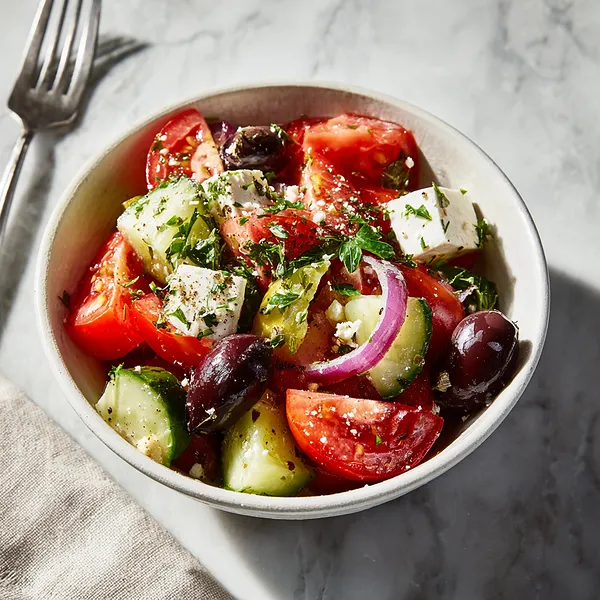
- Pour your beautiful lemon-oregano dressing over all the vegetables and cheese in your large bowl. Using two large spoons or your clean hands, gently toss everything together. The key word here is gentle – you want to coat everything evenly with the dressing without crushing the tomatoes or breaking up the feta too much. Make sure the olives and onions are distributed throughout rather than clumped together.
- Final Touches and Serving
- Give your salad a final look and adjust anything if needed. Sprinkle freshly chopped parsley over the top for a burst of color and fresh herb flavor. You can serve this immediately, but it actually benefits from sitting for about 15-20 minutes at room temperature, allowing all those Mediterranean flavors to meld together beautifully. If you're making it ahead, you can refrigerate it for up to 2 hours, but let it come back to room temperature before serving for the best flavor.
 pin it
Switch Things Up
I'll never forget the first time I made this Greek salad for a summer barbecue. I was running late and needed something quick, so I threw this together in what felt like seconds. When I brought it out, everyone kept asking for the recipe, amazed that something so delicious could be so simple. Now it's my go-to whenever I need a crowd-pleaser. Sometimes I add bell peppers for extra crunch, or swap the cherry tomatoes for heirloom varieties when they're in season. On really hot days, I'll chill the bowl in the fridge for 20 minutes before serving – it's so refreshing. The beauty of this salad is that it's incredibly forgiving. Forgot the red onion? No problem. Want to add some chickpeas for protein? Go for it. I've made variations of this salad dozens of times, and it never disappoints.
Perfect Pairings
This Greek salad pairs beautifully with grilled meats, especially lamb kebabs or lemon-herb chicken. It's also fantastic alongside grilled fish like sea bass or salmon. For a complete Mediterranean feast, serve it with warm pita bread, hummus, and tzatziki sauce. The salad's bright, acidic flavors also make it an excellent companion to rich dishes like moussaka or spanakopita. If you're keeping it vegetarian, pair it with falafel or a hearty lentil soup. Don't forget a chilled glass of white wine or sparkling water with lemon to complete the experience.
 pin it
Frequently Asked Questions
- → Can I make this salad ahead of time?
Yes! You can prepare all the vegetables and store them separately, then assemble and dress the salad up to 2 hours before serving. However, it's best not to dress it too far in advance, as the vegetables will release water and dilute the dressing. The salad actually improves after sitting for 15-20 minutes once dressed.
- → What can I substitute for feta cheese?
If you can't find or don't like feta, you could try crumbled goat cheese or even cubed mozzarella, though these will change the traditional flavor profile. For a dairy-free version, you could use a vegan feta alternative, or simply omit the cheese and add more olives for that salty, tangy element.
- → Why doesn't authentic Greek salad contain lettuce?
Traditional Greek salad, called Horiatiki, focuses on showcasing the best summer vegetables without lettuce. The Greek philosophy is that lettuce can water down the bold flavors of the other ingredients. The salad relies on chunky vegetables and the delicious juices they release when combined with the dressing.
- → How do I keep the red onion from being too strong?
If you find raw red onion too pungent, soak the sliced onions in cold water for 10 minutes before adding them to the salad. This mellows their sharp bite while maintaining their crisp texture. You can also use less onion or substitute with milder green onions if preferred.
- → Can I add other vegetables to this salad?
Absolutely! While the classic version is simple, many people add bell peppers, especially green ones, for extra crunch and color. Some variations include radishes, capers, or even chickpeas for added protein. Just remember that the beauty of Greek salad is in its simplicity, so don't overwhelm it with too many additions.
- → What's the best type of olive oil to use?
Use extra virgin olive oil, preferably a Greek variety if you can find it. Since the olive oil is one of the main flavor components and not cooked, its quality really matters. Look for a fruity, slightly peppery oil that will complement the other Mediterranean flavors in the salad.
- → How long will leftovers keep?
The dressed salad will keep in the refrigerator for up to 24 hours, though the vegetables will release more liquid over time. If you know you'll have leftovers, consider dressing only the portion you'll eat immediately and storing the rest of the vegetables and dressing separately to maintain the best texture.
Conclusion
This Easy Greek Salad is proof that the simplest recipes are often the best. With no cooking required and minimal prep time, you can have a restaurant-quality Mediterranean dish on your table in minutes. The combination of fresh vegetables, tangy feta, and briny olives creates a perfect balance of flavors and textures. Whether you're serving it as a light main course or a refreshing side dish, this salad brings the taste of the Mediterranean to your home with every bite.